
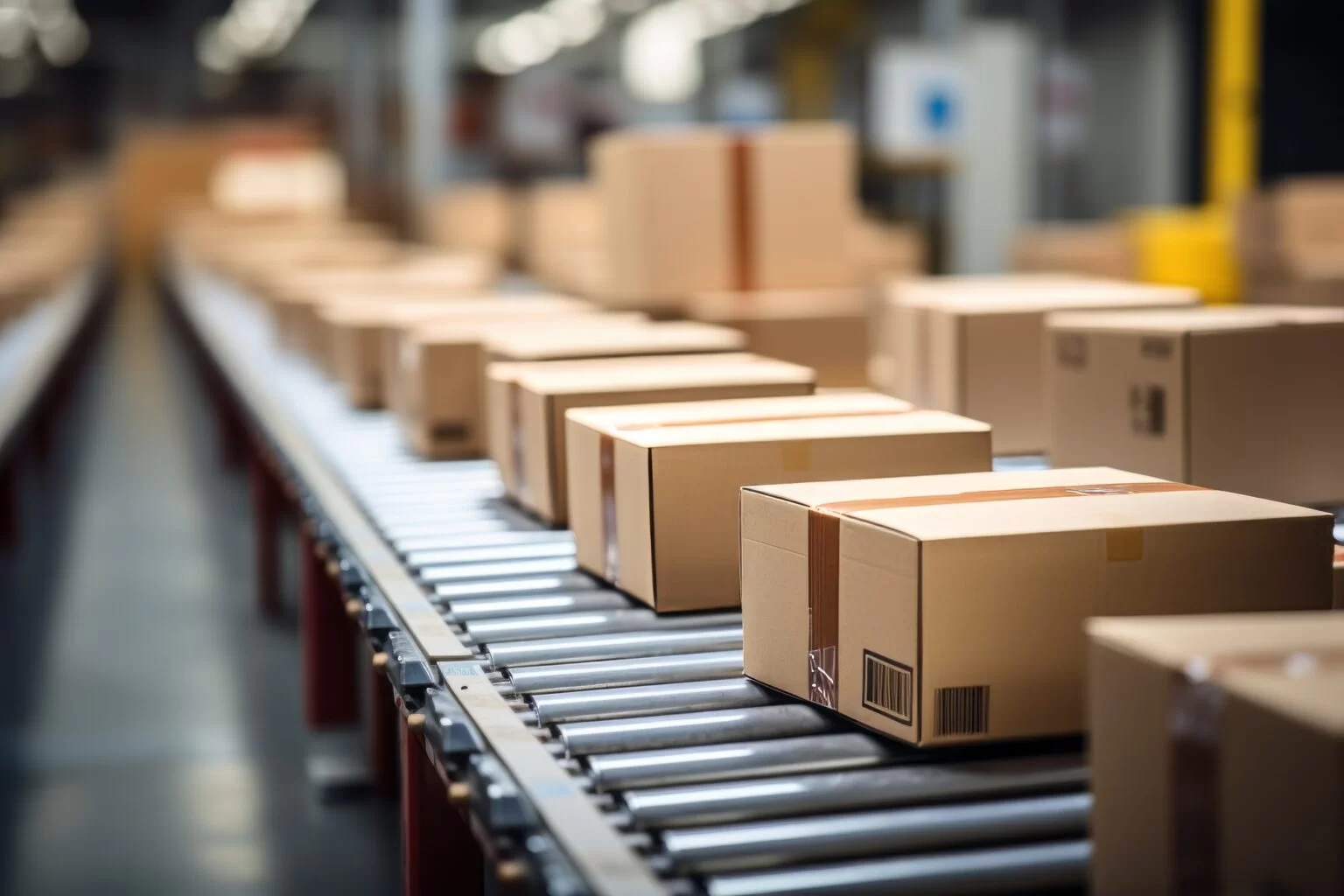
From Product Identification to Integrated Production and Fulfilment
Last week’s developments across industrial machine vision, packaging automation and warehouse integration highlighted an increasingly important shift in manufacturing: the move away from evaluating individual machines in isolation towards understanding how complete production and fulfilment systems perform. From Cognex’s record quarterly revenue to the newly formalised partnership between Packsize and Swisslog, the industry is demonstrating how identification, inspection, packaging and material movement are becoming more closely connected. Meanwhile, MBO’s introduction of an automated paper-wrapping system illustrates how manufacturers are continuing to address manual handling and operational bottlenecks at the end of otherwise sophisticated production lines.
The commercial significance extends beyond individual equipment capabilities. Manufacturers may invest in high-performance coding and marking systems, automated labelling, machine-vision inspection and packaging machinery, yet still experience inefficiencies where products move between those technologies. As automation becomes more widespread, the ability to coordinate equipment, maintain reliable identification and preserve consistent product movement is becoming an increasingly important measure of manufacturing performance.
Cognex reports record revenue as industrial machine vision investment continues
One of the period’s most significant developments came from Cognex, which reported its third-quarter financial results on 4 November. The US-based industrial machine-vision specialist achieved record quarterly revenue of $313 million, representing growth of 13% compared with the corresponding period in 2025. Excluding a one-time commercial partnership benefit recorded in the previous year’s comparison period, revenue increased by 19%. Operating margin improved to 32.2%, while adjusted EBITDA margin reached 35.5%, reflecting stronger revenue performance and improvements in operating efficiency. Cognex also increased its full-year revenue outlook to between $1.143 billion and $1.163 billion.
These results are particularly relevant to product identification and traceability because machine vision supports several essential functions across modern manufacturing operations. Industrial cameras and image-processing software are used to verify printed barcodes and Data Matrix codes, inspect product quality, identify defects, measure components and guide automated handling equipment. In direct part marking, machine vision can verify permanent identifiers applied to metal and other industrial components, while pharmaceutical packaging systems rely on similar technologies to inspect serialised codes and confirm that products meet specified requirements. Although Cognex’s consolidated results span several industries and should not be interpreted as a direct measure of demand for any single application, they demonstrate the continuing commercial importance of industrial vision within increasingly automated manufacturing environments.
The company’s previously announced agreement to acquire RealSense provides additional strategic context, although it is not a new transaction from this reporting period. The proposed acquisition would extend Cognex’s capabilities into depth sensing and robotic perception, complementing its established machine-vision portfolio. This reflects a broader technological direction in which vision systems are increasingly used not only to inspect products but also to help automated equipment interpret its surroundings and make handling decisions. For manufacturers, the potential benefits include greater flexibility in robotic picking, product orientation and material movement. For OEMs and integrators, the opportunity lies in combining these capabilities with mechanical automation, controls engineering and production software to deliver dependable system-level performance.
Source: Cognex — Third Quarter 2026 Results, 4 November
Packsize and Swisslog bring packaging into the wider automation architecture
A significant strategic partnership was announced on 4 November by Packsize and Swisslog, bringing together Packsize’s right-sized, on-demand packaging technology with Swisslog’s warehouse automation, robotics and systems-integration expertise. Rather than approaching packaging as a separate activity after goods have been picked, the companies intend to incorporate packaging requirements into the design and sequencing of automated fulfilment operations from an earlier stage. The agreement builds on existing cooperation between the businesses, including previously implemented projects, but formalises a broader approach to connecting storage, retrieval, packaging and shipment preparation.
The commercial significance lies in the relationship between packaging dimensions, product movement and fulfilment efficiency. Conventional operations often rely on a limited selection of standard carton sizes, potentially increasing material consumption, void-fill requirements and transportation volume. Right-sized packaging technology addresses this by producing cartons according to the dimensions of individual orders or product groups. However, the full benefit depends on how effectively those systems connect with upstream picking, product sequencing and downstream sealing, labelling and dispatch. Integrating packaging into the wider warehouse architecture can reduce unnecessary handling and improve the consistency of material flow, particularly in high-volume operations where relatively small inefficiencies can become significant over time.
For product identification and traceability, the connection between packaging and fulfilment is particularly important. Once products have been selected and packed, the correct shipping label must be generated and applied to the corresponding package, while barcode-reading and verification systems may be required to confirm that the package matches the intended order. In applications involving serialisation, aggregation or regulated track and trace, the relationship between individual products and their shipping units becomes even more significant. The Packsize–Swisslog partnership is not itself a pharmaceutical serialisation announcement, but it illustrates the wider operational environment in which accurate identification, automated labelling and dependable product movement must work together. For equipment manufacturers and systems integrators, the development reinforces the importance of understanding the complete customer process rather than supplying machinery as an isolated solution.
Source: Packsize — Strategic Partnership with Swisslog, 4 November
MBO introduces automated paper wrapping at the end of the production line
Another development came from Germany, where MBO Postpress Solutions, part of the Komori Group, introduced WrapXi, an automated end-of-line packaging system. Announced on 1 November, the equipment receives stacks of finished printed products, wraps them in kraft paper, seals the package with paper tape, applies a label and transfers the completed unit towards palletising. The system became available to order in Germany, the United Kingdom, France and Italy from the beginning of November, with further markets expected to follow.
The development addresses a familiar manufacturing challenge: the final stages of production are not always automated to the same extent as the processes preceding them. Commercial printing and finishing operations may use highly automated presses, folding machines and binding equipment, yet still depend on manual labour to arrange, wrap, seal and prepare finished products for distribution. WrapXi is designed to automate these activities, reducing repetitive handling while introducing a paper-based alternative to conventional plastic wrapping. The equipment can accommodate different stack orientations and production configurations, adjusting the wrapping material to suit the finished product.
Although the application differs from conventional food, beverage or pharmaceutical packaging, the underlying automation principles are directly relevant to the wider end-of-line market. Finished products must be transferred consistently between processes, packaging materials must be applied reliably, and completed packages must remain suitable for subsequent identification, handling and distribution. The integration of wrapping, sealing and labelling within one automated system demonstrates how manufacturers are seeking to eliminate manual intervention at the points where production stages connect. The environmental dimension is also noteworthy, although the overall benefits of replacing plastic with paper depend on factors including material consumption, product protection and recycling infrastructure. For manufacturers evaluating similar investments, the commercial case must therefore consider labour requirements, equipment throughput, packaging costs and the reliability of the complete operation.
Source: Komori — MBO Introduces WrapXi, 1 November
Regulatory & Standards Watch: Integration increases the importance of reliable data
The reporting period did not introduce a major new regulatory framework, but the developments reinforce the importance of established standards and upcoming implementation milestones. GS1’s Sunrise 2027 initiative continues to encourage broader retail adoption of 2D barcode capabilities, influencing decisions around coding equipment, barcode verification and packaging design. The objective is to improve retail point-of-sale readiness for GS1-compliant 2D barcodes alongside existing linear symbols, rather than impose a universal requirement for every manufacturer to replace conventional barcodes by that date. For equipment suppliers, the transition creates practical considerations around code generation, printing, scanning, verification and the management of additional product information.
Other regulatory programmes introduce more specific obligations. Medical-device Unique Device Identification systems depend on consistent product identifiers and properly maintained records, while pharmaceutical serialisation frameworks require manufacturers and supply-chain partners to manage regulated identifiers and transaction information. The EU Packaging and Packaging Waste Regulation and developing Digital Product Passport requirements introduce further considerations around packaging materials, product information and data accessibility. In the United Kingdom, the Vaping Products Duty and Duty Stamps Scheme is bringing digitally enabled identification into another regulated consumer-products market. Although these programmes differ substantially in scope and implementation, they share an important operational principle: physical identifiers must remain connected to accurate and dependable information.
For manufacturers considering new automation investments, the practical implication is that equipment specifications should account not only for current production requirements but also for the ability to accommodate future changes in identification standards, packaging formats and verification processes. A highly automated system may deliver excellent mechanical performance, but its long-term value can be constrained if it cannot reliably exchange the information needed to support production control, traceability and compliance.
The commercial outlook: The value increasingly lies between machines
Taken together, the developments demonstrate how industrial automation is moving beyond the performance of individual technologies towards the reliability of complete production and fulfilment systems. Cognex’s results illustrate continuing investment in machine vision and automated identification, while its strategic direction highlights the growing relationship between visual perception and robotic handling. The Packsize–Swisslog partnership brings packaging into the wider architecture of warehouse automation, while MBO’s WrapXi system addresses manual handling and material application at the end of an otherwise automated production process. Each development illustrates a different aspect of the same challenge: ensuring that individual technologies contribute to a coordinated and commercially effective operation.
For manufacturers, the investment question increasingly concerns how effectively equipment works together. Coding and marking systems must apply reliable identifiers, labelling equipment must place accurate information on the correct product or package, and machine-vision technology must verify quality and identification at production speed. Downstream automation must then handle those products consistently, while supporting software maintains the information required for production control, traceability and distribution. For OEMs and systems integrators, this creates opportunities extending beyond individual equipment specifications into application engineering, controls integration, software connectivity and long-term technical support.
The specialist talent implications follow naturally. Engineers with expertise in coding and marking, industrial labelling, machine vision and end-of-line automation remain essential, but there is increasing value in professionals who understand how these disciplines interact. Applications engineers capable of translating manufacturing requirements into integrated solutions, technical sales specialists who can demonstrate system-level commercial value, and service professionals able to maintain increasingly interconnected equipment all contribute to the long-term performance of automated operations.
Mark → Label → Verify → Inspect → Package remains the physical foundation of the sector. What is changing is the importance of the processes connecting those stages. As manufacturing and fulfilment become more automated, competitive advantage increasingly depends not simply on how well individual machines perform, but on how reliably the complete system operates.
Traceability Weekly™ is published by RoboEdge Talent, covering the companies, technologies, regulatory developments and specialist talent shaping global Product Identification, Traceability & End-of-Line Automation.
Hiring Or Building Capability In This Area?
RoboEdge maps specialist talent across OEMs, distributors, integrators and manufacturers in Product Identification, Traceability & End-of-Line Automation.