
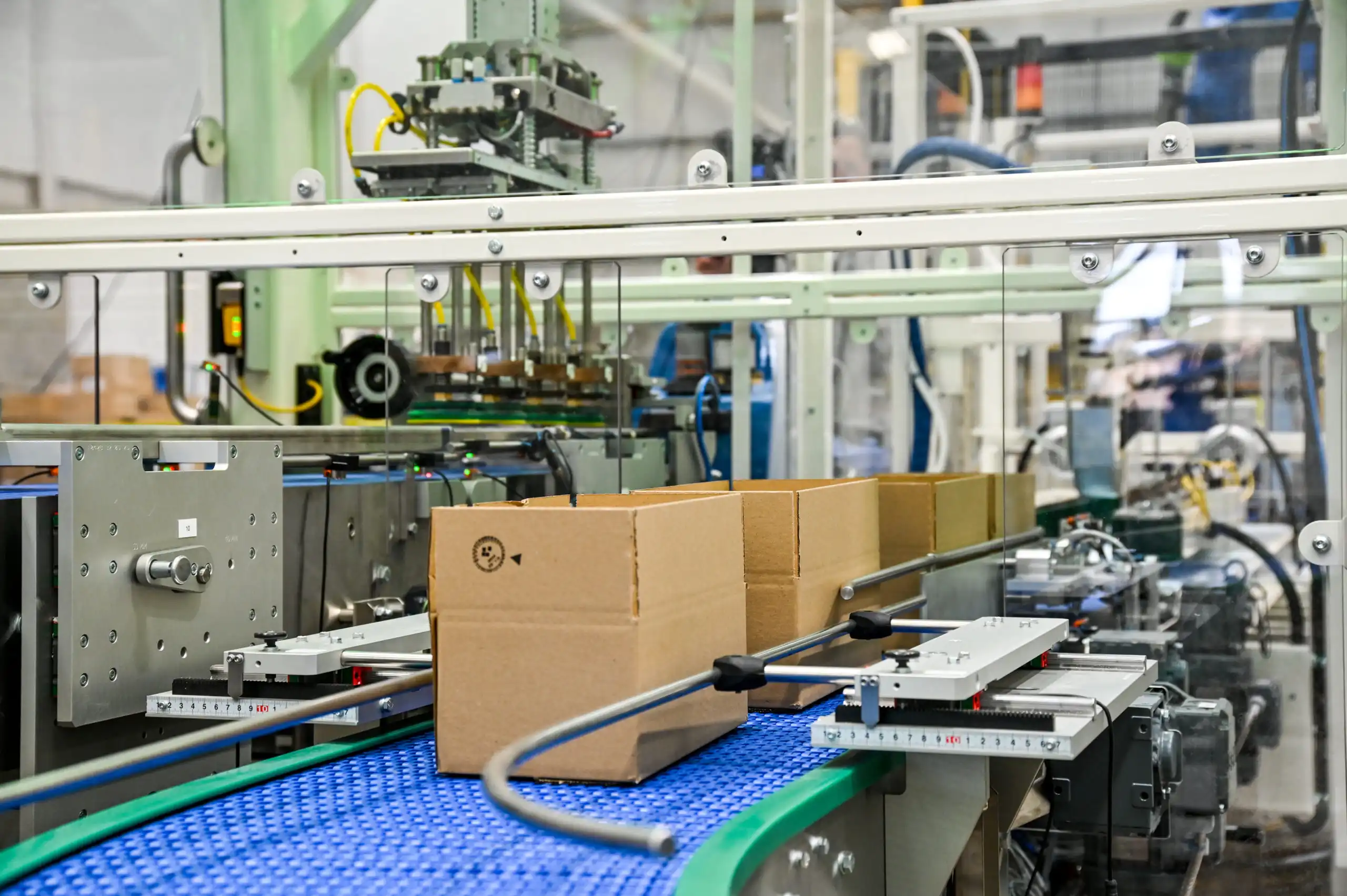
From Identification to Controlled Execution
Last week’s Traceability Weekly™ examined how packaging innovation is placing greater demands on the flexibility of production equipment. This week, developments across coding and marking, pharmaceutical serialisation, machine vision and industrial software have brought another aspect of that challenge into focus: how manufacturers maintain control as increasingly automated processes become more closely connected. PACK EXPO International, held in Chicago from 18–21 October, provided a useful backdrop, bringing together more than 2,700 exhibitors across processing, packaging, identification and automation. Alongside the exhibition, new announcements from Videojet and TraceLink demonstrated how equipment suppliers and software developers are addressing the growing importance of code accuracy, production data and reliable execution across manufacturing and supply-chain operations. Pack Expo International
The significance extends beyond individual product launches. Manufacturers are increasingly expected to maintain reliable product identification while reducing operator intervention, improving inspection performance and preserving accurate records across multiple systems. A code must be printed correctly, verified against the intended product and, where required, associated with subsequent packaging or aggregation events. Downstream equipment must then handle that product consistently, while the software infrastructure maintains a dependable record of what occurred. This is where the familiar sequence of Mark → Label → Verify → Inspect → Package becomes more than a collection of adjacent technologies. The commercial challenge is ensuring that the complete process operates as one controlled system.
Videojet strengthens its thermal inkjet portfolio as 2D coding requirements evolve
One of the week’s most relevant product-identification launches came from Videojet Technologies, which formally introduced the Videojet 8530 and Wolke m620 touch thermal inkjet printers on 22 October. Designed for high-resolution coding across primary and secondary packaging, the new platforms support QR codes, Data Matrix codes, batch information, expiry dates and other variable data, with print resolutions reaching 600 × 600 dpi. Applications span pharmaceuticals, cosmetics, food, beverage and electronics, where consistent code quality and reliable integration with existing production equipment remain essential.
The significance lies in the combination of printing performance and operational control. Both systems incorporate Videojet’s SIMPLICiTY interface and Code Assurance capabilities, designed to reduce coding errors through rules and validation controls. Standard communication protocols support integration into existing TIJ environments, while leader/follower configurations allow multiple printheads and controllers to operate together. The Wolke m620 touch is particularly relevant to pharmaceutical and medical-device manufacturers, with high-resolution coding capabilities for serialisation applications and a validation package intended to support GAMP-related requirements. Both printers can also operate alongside Videojet’s wider software environment, including CLARiSUITE, Velicity Design and remote-service capabilities. United States
For manufacturers, the commercial importance is not simply the ability to produce a smaller or more detailed code. As product-identification requirements become increasingly data-driven, the printer must receive accurate information, apply it consistently and operate within a controlled production process. GS1 2D migration adds another consideration, particularly where manufacturers are preparing packaging artwork, production systems and scanning infrastructure for wider use of Data Matrix and QR codes. However, the ability to print a 2D code at high resolution does not automatically establish compliance with applicable barcode-quality requirements. Code readability and verification still depend on the complete application, including substrate, ink, printhead configuration, code dimensions and inspection conditions. Videojet’s launch reflects the continuing evolution of thermal inkjet from a relatively straightforward printing technology towards a more integrated element of industrial product identification.
Systech combines serialisation, verification and tamper evidence
Pharmaceutical packaging provided another strong example of this movement towards integrated execution. Systech introduced two new carton serialisation stations on 15 October, with the ST33 demonstrated at PACK EXPO during the reporting week. The ST33 Carton Serialization Station combines code printing, camera verification and automatic rejection of failed cartons in a compact system capable of operating at up to 600 cartons per minute. The ST34 Carton Serialization Station with Tamper Evident extends that approach by incorporating tamper-evident sealing and verification, with stated speeds of up to 400 cartons per minute for suitable carton formats.
Both stations operate within Systech’s UniSeries software environment and are designed to reduce the number of separate processes required for pharmaceutical carton identification. The ST33 can accommodate multiple print positions and up to three smart cameras, allowing inspection of different carton surfaces, while Data Matrix grading against ISO 15415 is incorporated into the production process. The ST34 adds seal application and verification within the same station, bringing code quality and package-integrity checks closer together. The systems are intended for pharmaceutical manufacturers, contract manufacturing organisations and CDMOs seeking greater production flexibility without necessarily replacing complete packaging lines. Systech
The commercial implications are particularly relevant to regulated manufacturing. Serialisation is not simply the act of printing a unique identifier. Manufacturers must maintain control over the information associated with that identifier, verify that the correct code has been applied and ensure that rejected or reworked products do not compromise production records. Where tamper-evident sealing is required, the physical package must also satisfy additional integrity requirements. Combining these functions within a coordinated system can reduce the handling and synchronisation challenges associated with separate equipment, while simplifying the relationship between production events and their corresponding records. For OEMs and integrators, the development reinforces the importance of understanding pharmaceutical packaging as a complete process involving printing, vision inspection, mechanical handling, software and validation rather than as a series of independent machines.
JLS Automation demonstrates AI vision for less predictable product handling
Machine vision also featured prominently at PACK EXPO, with JLS Automation introducing JLS VISION AI, a proprietary vision system designed for integration with selected JLS robotic packaging equipment. The technology addresses a familiar problem in food and packaging automation: products do not always arrive at the next machine in a predictable orientation or neatly separated flow. Traditional robotic handling applications can require additional conveyors, mechanical separation systems or manual intervention to prepare products for reliable picking. JLS is attempting to reduce that dependency by enabling its robots to identify and handle products that are touching, overlapping or stacked.
The system uses AI-based classification and tracking to determine which product is accessible, establish its position and orientation, and guide the robot through the appropriate picking operation. It can process images at up to 15 frames per second and supports both 2D and 3D vision where additional height information is required. During PACK EXPO, JLS demonstrated the technology using irregularly presented condiment packets, with the robotic system identifying individual items, correcting their orientation and arranging them into a more controlled flow for downstream packaging. The company has developed the technology specifically for its own robotic platforms rather than positioning it as a standalone vision product for third-party equipment. JLS Automation
This is an important distinction in the development of industrial machine vision. Much of the industry’s attention has historically focused on improving inspection accuracy, reading difficult codes or identifying defects under challenging conditions. JLS demonstrates another application: using visual information to make automated handling more tolerant of variation in the physical product. The potential commercial benefits include reduced upstream preparation equipment, less manual product orientation and more flexible handling of different formats. However, these benefits remain application-dependent, particularly where products differ substantially in weight, surface characteristics or presentation. For manufacturers, the wider significance is that machine vision is increasingly influencing how products move through the production line, rather than simply determining whether they pass or fail an inspection.
TraceLink moves supply-chain automation towards governed AI execution
While PACK EXPO highlighted the physical production environment, TraceLink provided one of the week’s more significant software developments. On 21 October, the company announced new capabilities within its OPUS platform designed to improve the reliability, governance and performance of AI agents carrying out supply-chain processes. The development centres on the OPUS Brain and what TraceLink calls Semantic Inference Plans, which allow agent instructions to be converted into structured execution plans that can be inspected, tested and approved before deployment.
The approach addresses a significant challenge in enterprise AI adoption. Many supply-chain processes involve recurring activities governed by established rules, business relationships and regulatory requirements. Repeatedly generating a new sequence of reasoning for every similar event can introduce additional processing costs and potentially inconsistent outcomes. TraceLink’s architecture is designed to establish approved execution plans for recurring work, supported by version-controlled agent profiles, dependency tracking and operational logs. These records allow organisations to examine how an agent performed a task, whether it followed the approved process and what business outcome resulted. The company demonstrated the capabilities during FutureLink Barcelona, held from 19–21 October. TraceLink
For pharmaceutical serialisation and track-and-trace operations, the implications are particularly interesting. Manufacturers and their trading partners already exchange substantial quantities of product and transaction information, but maintaining those records does not automatically resolve the operational problems that arise when something goes wrong. Incorrect data, transaction mismatches, shipment discrepancies and regulatory exceptions can require investigation across multiple organisations and systems. AI-assisted processes may eventually help teams identify and resolve certain recurring issues more efficiently, provided the underlying data, permissions and execution rules remain dependable. TraceLink’s development should therefore be viewed as an advance in the governance of supply-chain automation rather than evidence that complex compliance investigations can now be handled without human oversight. The wider market signal is clear: traceability software is increasingly being developed not only to record what happened, but to support controlled action when those records reveal a problem.
End-of-Line Watch: Waites targets the reliability of material movement
Another development from the exhibition week came from Waites Sensor Technologies, which introduced Waites Conveyance on 19 October. The offering brings together established condition-monitoring technology, machine-learning analysis and specialist diagnostic support to help manufacturers, distribution centres and logistics operators identify developing conveyor problems before they interrupt material movement. Sensors monitor characteristics such as vibration and temperature across bearings, rollers, motors and gearboxes, while the software and analyst services help maintenance teams interpret the information and prioritise corrective action.
The system builds on Waites’ existing deployments across more than 400 material-handling facilities rather than representing an entirely new sensing technology. The company cites a customer case study involving approximately 10,000 sensors across seven facilities, reporting $1.8 million in avoided unplanned downtime and more than 350 hours of protected operations. Those figures relate to the reported customer deployment and should not be treated as guaranteed results for other installations. Waites
Although condition monitoring is not itself a product-identification technology, its relevance to End-of-Line automation is considerable. A production line may have sophisticated coding, inspection, case-packing and palletising systems, yet remain vulnerable to relatively small mechanical failures in the conveyors connecting them. A failed bearing or gearbox can interrupt the movement of correctly identified and packaged goods just as effectively as a major machine breakdown. As manufacturers invest in more automated material handling, the reliability of these connecting systems becomes increasingly important. The development illustrates why end-of-line performance depends not only on individual machines but also on maintaining the continuous movement of products through the complete operation.
Regulatory & Standards Watch: Reliable identification remains the foundation
The week’s product and software developments reinforce the importance of several established regulatory and standards programmes, although none should be presented as a newly introduced requirement during this reporting period. GS1’s Sunrise 2027 initiative continues to encourage the wider adoption of 2D barcode capabilities at retail point of sale, while pharmaceutical manufacturers face established serialisation obligations under frameworks including the EU Falsified Medicines Directive and the US Drug Supply Chain Security Act. The FDA’s transition to a uniform 12-digit National Drug Code format, scheduled to take effect on 7 March 2033, introduces additional long-term requirements for pharmaceutical data systems and labelling. The FDA has confirmed that a GS1 Data Matrix containing the appropriate information may be used to satisfy relevant barcode and DSCSA identifier requirements once the new format takes effect. U.S. Food and Drug Administration
In Europe, the Packaging and Packaging Waste Regulation has applied on a phased basis since 12 August 2026, while Digital Product Passport requirements and medical-device UDI frameworks continue to influence how product identity is maintained and accessed. These regimes differ in scope, implementation and legal obligations, but they reinforce the importance of reliable identification and structured information. The UK’s Vaping Products Duty and Duty Stamps Scheme provides a particularly immediate example: digitally enabled stamps become mandatory for newly manufactured or imported products from 1 January 2027, requiring affected businesses to consider secure labelling, scanning, activation and supply-chain traceability. For manufacturers, the practical lesson is that regulatory readiness depends on more than selecting a compliant printer or label. It requires dependable relationships between physical products, identification systems, verification processes and the information recorded throughout the supply chain. European Commission
The commercial outlook: From equipment performance to process assurance
Taken together, this week’s developments demonstrate how the market is progressing beyond the performance of individual technologies towards the reliability of complete manufacturing and supply-chain processes. Videojet is strengthening the relationship between high-resolution coding and software-controlled production. Systech is combining pharmaceutical serialisation, verification and tamper evidence within integrated equipment. JLS Automation is using AI vision to make robotic handling more tolerant of unpredictable product presentation, while TraceLink is introducing additional governance around AI-assisted supply-chain execution. Waites, meanwhile, is addressing the mechanical reliability of the systems that connect automated production and distribution operations.
For manufacturers, these developments raise an increasingly important investment question: how reliably can the complete process identify a product, verify its condition, move it through production and preserve an accurate record of what occurred? For OEMs and systems integrators, the commercial opportunity extends beyond equipment specifications into application engineering, controls integration, software connectivity and lifecycle support. A printer, camera, robot or conveyor may perform its individual function exceptionally well, but the value delivered to the customer ultimately depends on whether the wider system operates consistently.
The talent implications follow naturally. Specialists with deep experience in coding and marking, industrial labelling, machine vision, serialisation, track and trace and packaging automation remain essential. Increasingly, however, technology suppliers and manufacturers also need engineers, applications specialists and commercial leaders who understand how these disciplines interact. The ability to translate complex production requirements into dependable, integrated solutions is becoming a particularly valuable capability.
Mark → Label → Verify → Inspect → Package remains the physical foundation of this market. What is changing is the level of control required between those stages. As manufacturers move towards more connected production environments, the competitive advantage increasingly lies not simply in automating individual tasks, but in ensuring that identification, inspection, material movement and digital records remain aligned throughout the process.
Traceability Weekly™ is published by RoboEdge Talent, covering the companies, technologies, regulatory developments and specialist talent shaping global Product Identification, Traceability & End-of-Line Automation.
Hiring Or Building Capability In This Area?
RoboEdge maps specialist talent across OEMs, distributors, integrators and manufacturers in Product Identification, Traceability & End-of-Line Automation.