
Introduction
In modern manufacturing, traceability is no longer optional — it’s critical.
From coding and marking products, through to print and apply labelling, barcode verification, and end-of-line packaging automation, manufacturers rely on a chain of capital equipment systems working together under pressure.
When these systems perform, production flows.
When they fail, the impact is immediate — downtime, rejected goods, compliance risks, and lost revenue.
This guide explains how traceability works across the production line, covering coding and marking technologies (CIJ, laser, TIJ), labelling systems, vision and verification equipment, and end-of-line automation — and what manufacturers need to consider when selecting and operating them.
Coding & Marking Systems in Manufacturing (CIJ, Laser & TIJ)
What is coding and marking?
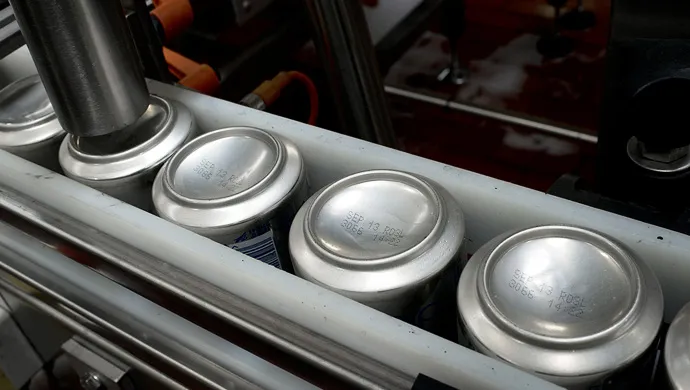
Coding and marking is the process of applying variable data onto products, including batch codes, expiry dates, barcodes, and traceability information.
This is achieved using industrial capital equipment such as continuous inkjet (CIJ) printers, laser marking systems, and thermal inkjet (TIJ) printers. These systems sit directly on production lines and play a critical role in compliance, product identification, and supply chain traceability.
CIJ vs Laser vs TIJ: Which coding technology is best?
There is no universal “best” coding and marking solution — only what is right for the application.
CIJ printers remain widely used in high-speed manufacturing due to their flexibility across substrates and ability to run continuously. However, they require regular maintenance and are often associated with blocked printheads, cleaning cycles, and ongoing consumable usage.
Laser marking systems provide a permanent, high-quality mark with no consumables. They are often selected where uptime, consistency, and long-term cost control are priorities, although they involve higher upfront investment and more complex integration.
TIJ systems offer clean, high-resolution printing with minimal maintenance and are well suited to packaging environments. However, they may be less effective in harsh conditions or at very high line speeds.
Ultimately, the right choice depends on production speed, material type, environment, and long-term operating requirements.
Common coding and marking problems (and how to reduce downtime)
Across production environments, the same issues tend to appear repeatedly: unexpected printer downtime, inconsistent print quality at speed, excessive operator intervention, and ongoing consumable costs.
In most cases, the root cause is not the equipment itself, but how it has been specified, installed, and maintained.
Reducing downtime in coding and marking systems comes down to selecting the correct technology for the application, ensuring proper integration into the production line, and having experienced engineers responsible for ongoing support.
Total Cost of Ownership (TCO) in Coding, Marking & Labelling Systems
One of the most common mistakes in capital equipment investment is focusing too heavily on purchase price.
In reality, the initial cost is only a small part of the overall investment.
Total Cost of Ownership (TCO) considers the full lifecycle cost of equipment — including operation, maintenance, downtime, and efficiency over time.
What makes up Total Cost of Ownership?
Across coding and marking, print and apply labelling, and vision systems, TCO is influenced by several key factors:
• Consumables such as ink, solvent, ribbons, and labels
• Maintenance and servicing requirements
• Spare parts and component replacement
• Energy consumption
• Planned maintenance downtime
• Unplanned breakdowns
• Operator interaction and inefficiency
These factors vary significantly depending on the technology and how well it has been implemented.
Why cheaper equipment often costs more
Lower-cost machines can appear attractive initially, but over time the true cost becomes clear.
High consumable usage, repeated maintenance intervention, and unexpected breakdowns often lead to increased operational costs and reduced production efficiency.
In many cases, what appears to be a cost saving becomes a false economy — particularly in high-throughput environments where uptime is critical.
Downtime: the biggest hidden cost in manufacturing
Downtime is often the single biggest contributor to total cost of ownership.
When coding or labelling systems fail, production lines back up, operators are left waiting, and output drops immediately.
In print and apply labelling environments, repeated operator intervention and unplanned stoppages significantly increase the true cost of running the system.
In capital equipment environments, the real question is not “what does it cost?” — it’s “what does it cost when the line stops?”
How technology choice impacts long-term cost
Different technologies carry different cost profiles.
CIJ systems offer flexibility but require ongoing consumables and maintenance. Laser systems demand higher upfront investment but reduce long-term intervention. TIJ systems simplify operation but rely on cartridge-based consumables. Print and apply systems are driven heavily by label and ribbon efficiency, while vision systems justify their cost through error reduction and compliance.
Comparing equipment purely on capital cost is misleading — the true comparison must be based on uptime, cost per output, and long-term reliability.
Why TCO thinking leads to better decisions
When manufacturers move from price-based decisions to total cost of ownership thinking, the entire approach changes.
Investment shifts toward reliability and performance. Equipment is selected based on application fit rather than cost alone. Service and support become part of the decision-making process, and long-term efficiency outweighs short-term savings.
In most cases, higher upfront investment leads to lower total operating cost and greater production stability.
Print & Apply Labelling Systems Explained
What is print and apply labelling?
Print and apply labelling systems automatically generate and apply labels to products, cartons, cases, and pallets as part of the production process.
They play a central role in traceability, logistics, and compliance, particularly in high-volume manufacturing environments.
How print and apply systems work
These systems integrate with production data to print variable information in real time and apply it accurately to moving products.
Accuracy, consistency, and uptime are critical — especially where labelling errors can disrupt distribution or lead to rejected goods.
Common labelling system challenges
Labelling issues often create problems further down the supply chain. Misplaced labels, unreadable barcodes, incorrect data, and integration failures can all lead to significant operational disruption.
Because these issues are often only discovered after products leave the production environment, the cost of failure can be substantial.
GS1 standards and compliance
GS1 standards govern how products are identified globally.
With the move toward 2D codes and initiatives such as Sunrise 2027, manufacturers are under increasing pressure to ensure that labelling systems meet evolving compliance requirements.
As a result, labelling is no longer just a packaging function — it is a core part of traceability strategy.
Vision Systems & Barcode Verification in Manufacturing
What is barcode verification?
Barcode verification ensures that printed codes meet quality standards and can be scanned reliably throughout the supply chain.
This is achieved using industrial vision systems installed directly on production lines.
Vision systems vs manual inspection
Manual inspection struggles to keep pace with modern production speeds and consistency requirements.
Vision systems provide real-time inspection, consistent quality control, and reduced reliance on manual processes — particularly in high-volume environments.
The real cost of barcode failures
Barcode quality issues often go unnoticed until products reach distribution or retail.
At that point, the impact can include rejected shipments, rework, supply chain disruption, and reputational damage.
As traceability requirements increase, barcode verification is becoming a critical part of production — not an optional extra.
End-of-Line Packaging & Automation Systems
What is end-of-line automation?
End-of-line automation refers to the systems used to package products at the final stage of production.
This includes capital equipment such as case packers, cartoners, palletisers, and robotic handling systems.
Improving end-of-line efficiency
Efficiency at the end of the line depends on how well systems are integrated.
Bottlenecks often occur when upstream processes outpace packaging capacity or when manual processes cannot keep up with production demand.
Optimising performance requires a joined-up approach across the entire production line.
Automation vs manual packing: understanding ROI
Manual packing can work at lower volumes, but as production increases, it introduces inconsistency and limits output.
Automated systems improve efficiency, consistency, and scalability, delivering measurable return on investment in higher-volume environments.
The hidden cost of poor end-of-line systems
Poorly performing end-of-line systems affect the entire production process.
Delays at this stage create upstream bottlenecks, reduce output, and increase operational pressure.
In many manufacturing environments, the end of the line is where overall performance is either achieved — or lost.
The Bigger Picture: Capital Equipment + People
Across coding and marking, labelling, verification, and packaging, these systems represent significant capital equipment investment.
However, performance rarely comes down to the equipment alone.
It depends on how systems are specified, installed, integrated, and supported over time.
In real-world production environments, performance is measured in uptime, output, and reliability — not theory.
Final Thought
Traceability and end-of-line automation is not a single system — it is an ecosystem.
Each part plays a role.
And when one part fails, the entire operation feels it.
Understanding how these technologies work together — and how to optimise them — is what separates average production environments from high-performing ones.